Urban Blog: DIGITAALISUUS MUUTTAA ELÄMÄÄ JA ASUMISEN ARVOMUUTOS RAKENTAMISTA

Urban Blog: Erja Laurila

Onko sinulla älypuhelin ja tabletti? Kolmannes suomalaisista vastaa Kyllä. Sanoma Oyj:n viimeisten tilastojen mukaan älypuhelin on peräti 60% väestöstä, tablettikin jo 32 prosentilla. Luku nousee nopeasti, viikoittain. Viimeisen kolmen kuukauden aikana puolet meistä on asioinut verkkokaupassa ostaen niin hyödykkeitä kuin turhakkeita. Myös ikääntyvät shoppailevat ahkerasti, oman kokemukseni mukaan mm. hyödyn ja huvin yhdistävillä ostaa ja myy -kirpparisivustolla, kuten tori.fi ja huuto.net. Kynnys käyttää tietokonetta ostoksissa onkin alentunut reippaasti samalla kun sosiaalinen media valtaa ajankäyttöämme – jo 56 % väestöstä on somen käyttäjiä.

Työikäisillä median liikkuva käyttö korostuu mm. työmatkoilla surffaillen ja asioita digitaalisesti hoitaen. Aika monilla meistä sähköposti on aina puhelimitsekin käytössä, samoin Messenger, Twitter ja tietenkin Facebook. Rakennuslehden päätoimittaja Veijo Käyhtyn mukaan sähköisen median käytön päivittäinen keskiarvo on tällä hetkellä Suomessa 8 h 9 minuuttia, yli kuusikymppisillä miltei yhdeksän tuntia. Netti jyrää 2,5 h osuudellaan jo televisionkin, jota katsotaan vain 1 h 25 minuuttia päivässä. Jos otamme mukaan perinteiset sanoma- ja aikakauslehdet ja radion, Suomessa keskiarvoksi tulee 8,5 tuntia. USA:ssa tuo luku on jopa 12,5 h, keskiarvo siis. Me median suurkuluttajathan olemme vielä asia erikseen, samalla kun nuorisolla on Instagramit, Tinderit ja What´s Upit auki 24/7.

Ei digitaalisuus toki rajoitu pelkästään median käyttöön, se on arkipäiväämme jo nyt tavalla, ettemme edes huomaa sen olemassa oloa. Kotitalousrobottienkaan tulevaisuus ei ole enää leffojen utopiaa, vaan ihan todellisuutta. Maailmalla yövytään robottien ylläpitämissä hotelleissa, 3D-tulostus on tätä päivää; avaruuteenkin printataan puuttuva työkalu noin vain. Espoon metro on mallinnettu kuulemma ainakin osittain 5D-ratkaisuilla, joka pitää kolmiulotteisuuden lisäksi paitsi ajan määreen, jotain muutakin, mitä tavallinen työläinen eikä edes insinööri osaa tältä seisomalta selittää.

TEKNOLOGIAN ANTAMAT MAHDOLLISUUDET KIINNOSTAVAT

Älykotiratkaisut saavat aikamoista buustia suuren ikäluokan kakkoskotien turvalaitteiden asennuksen myötä, ja kun elämää helpottavat ratkaisut on hyväksi todettu mökeillä, miksi ei samalla hyödynnetä uutta teknologiaa myös kotona. Varsinkin, kun yhä useammat eläkkeelle lähivuosina aikovat ennakoivat mukavaa elämistä, mm. seniorikotien tarjoomat huomioiden. Lisäpalveluja kun voivat olla paitsi ruoka ja tarvittava hoito, erilaiset matkustus-, fitness- ja monipuolisesti hinnoiteltavat muut bisnespalvelut. Aikoinaan puhuttiin talkkareista ja atk-tukihenkilöistä, eiköhän digitaalisuus tuo paitsi tarpeita myös vaateita; yhteisten tilojen digiosaajat ovat arvossaan nuoremmillekin. Eikä ikä ratkaise digimaailman hallintaa, sehän on pitkälti kiinni fyysisestä kunnosta ja mielen laadusta; uudet mahdollisuudet ja haasteet kiinnostavat energisiä ihmisiä aina. Teknologia voi myös auttaa yksinäisyyden tunteissa; äidille voi aina vaikka Skypettää, vaikka asuisikin toispuol jokkee. Romaniassa esteettömät ja vetovoimaiset kodinomaiset vanhustentalot rakennetaan ostareille. Tosin esim. Ruotsissa ikääntyväksi lasketaan jo 55 plus -vuotiaat.

Rakennuttajat ovat tämän markkinaraon huomanneet, erilaisten lisäpalveluiden tarjoajat heräilevät uusiin mahdollisuuksiin samalla, kun tämä kaupungistumisen pommi räjähtää käsiin aivan näinä vuosina. Asumisen arvomuutos on todellisuutta, johon tarvitaan kovaa bisnestä ja yhteiskunnan panostusta samalla kuin eri toimijoiden talkoohenkeäkin sitä ainakin ministeriöt, organisaatiot, kunnat ja kaupungit asumisvisioissaan peräänkuuluttavat. Asuntopoliittisesti tarvitaan ennaltaehkäisevää toimintaa talouden ratkaisuissa, maasopimuksissa ja tonttihankkeissa. Vuonna 2030 eli vain 15 vuoden päästä Suomessa on 1,5 miljoonaa yli 65-vuotiasta ja tarvitsemme uusia, resurssiviisaita, suvaitsevia ja turvallisia asumisratkaisuja eri seuduille keskusta-asumisen rinnalle.

ASUMISEN MUUTOS ANTAA ARVOA ASIAKKAALLE

Erilaiset ict- ja teknologiaratkaisut tukevat ikääntyneiden ja erityisryhmien kotona asumista. Varakkaat ja mukavuudenhaluiset keski-ikäiset vaativat taloteknisissä ratkaisuissa koteihinsa helppokäyttöisyyttä, elinympäristöönsä dynaamisia asuinrakentamisen ja infra- ja toimitilaratkaisuja. Energiatehokkuus ei ole enää vaihtoehto, se on vaatimus pitkäjänteiseen ympäristöpolitiikan toteutumiseen ja kaikkiaan edellytys arjen kohtuuhintaisempaan asumiseen.

Ihmisellä pitää olla iloa elämässä. Digitalisoituminen ei ole peikko eikä asumisen arvomuutos visio. Se on tätä päivää ja tulevaisuuden turvaa. Vähän yli 10 vuoden päästä minäkin olen jo kuusikymppinen. Toivottavasti asun mukavasti varustellussa kaupunkiasunnossani, työskentelen muutosjohtamisen näköalapaikalla ja lähettelen innoissani läppärilläni tekstejä ja kuvia mielenkiintoisesta kaupunkirakentamisesta etelän lomakohteestani Suomeen, joka on tuolloin Euroopan edelläkävijä urbaanissa elinympäristössä ja inhimillisissä asumisen ratkaisuissa.

Erja Laurila on Urban Millin työpajakonseptien ja kehittämisen pioneeri Aalto PROsta, joka poikkesi tutustumassa uusimpiin urbaaneihin innovaatioihin, kuten tilassa toimivaan BIM Shopiin ja älykotiratkaisuihin. Artikkelin pohdinta syntyi myös torstaina 15.1.2015 Finlandia-talolla pidetyssä Rakennuslehden ja Pohjola Rakennuksen Eloisa-seminaarissa Asumisen arvomuutos – mihin Suomi on menossa?

Using nature’s genius in architecture

How can architects build a new world of sustainable beauty? By learning from nature. At TEDSalon in London, Michael Pawlyn describes three habits of nature that could transform architecture and society: radical resource efficiency, closed loops, and drawing energy from the sun.

Call for Papers: Futures Studies Tackling Wicked Problems -konferenssi, 11.–12.6.2015 Turussa

Post from Finland Futures Research Centre: http://www.utu.fi/fi/yksikot/ffrc/ajankohtaista/uutiset/Sivut/cfp_conference2015.aspx

Call for Papers, Posters and Performances:

FUTURES STUDIES TACKLING WICKED PROBLEMS:
Where Futures Research, Education and Action Meet

11–12 June 2015, Turku, Finland

The 17th International Futures Conference of the Finland Futures Research Centre and the Finland Futures Academy, University of Turku
“Futures Studies Tackling Wicked Problems” is an international forum for the philosophies, methods, ideas and concrete examples to find out what is going on in the field of futures research, education and action. The aim is to harness the views of preferable futures and methods for reaching them. The conference will work collaboratively discussing research, initiatives and projects to gather various views and compose ideas to face future challenges.
The conference committee welcomes papers, posters and performances on following themes:
  • Philosophy of Futures Studies
  • Methodologies
  • Futures Education and Learning
  • Studies on Futures Research
  • Evolving Identity of Futures Research
  • Futures Movement and New Creative Cultures
Conference program will consist of keynote lectures, parallel sessions, panel discussions and performances. Our aim is to generate multidisciplinary, lively and productive discussions, as well as promote networking between people from different backgrounds. In this conference the tradition meets new ways of participation: academia meeting activism and experience meeting enthusiasm. We invite researchers, activists, artists, leaders and decision-makers to share and elaborate ideas how to construct the future together, discover opportunities and solve wicked problems.

The abstract submission is now open!

See conference website and guidelines for abstract submission: www.futuresconference.fi/2015. A selection of papers will be published afterwards in the conference publication.
Deadline for the abstracts: January 30, 2015
Notification of Acceptance: March 6, 2015
Early Bird registration ends: March 31, 2015​
We look forward to seeing you in Turku next summer, June 2015!

Organisers:

Conference office:

Finland Futures Research Centre
Turku School of Economics, University of Turku

Inspiring evening on Fear of Failure in Urban Cave – with IDBM Klubi and IMPROVment

What’s stopping you from making your coolest ideas happen? What can improve teach you about innovation, team work or failure? What happens in our mind when we are afraid of failing – or once we think we failed?

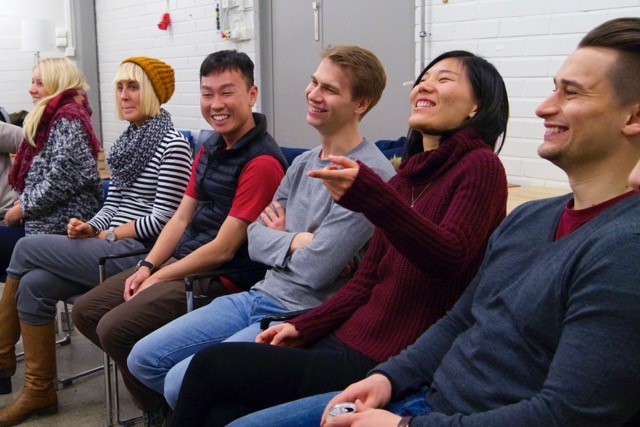
With the lead of Jani Turku from IMPROVment, a bunch of students from the multidisciplinary International Design Business Management program spent an inspiring evening at Urban Mill on January 15 discussing and experiencing the fear of failure by mechanisms of improvisation and creativity It was an evening with a lot of laughing, great discussions and relaxed atmosphere!

Most participants had not been at Urban Mill before and were excited to see the space, too.

IDBM_klubi5IDBM_klubi2IDBM_klubi3 IDBM_klubi7IDBM_klubi6IDBM_klubi1

The event was organized by IDBM Klubi ry in collaboration with Jani Turku from IMPROVment and Urban Mill. IDBM Klubi ry (www.facebook.com/idbmklubi) is an organization for International Design Business Management (www.idbm.fi) students, alumni and other like-minded people.

Jani Turku is an IDBM alumnus, Certified Applied Improvisation Practitioner and Business Coach. His company IMPROVment (www.improvment.fi) helps organizations to boost productivity, creativity and individuals’ skills by offering an opportunity for experiential learning in an interactive, safe, fun and lively atmosphere.

The space for the event was sponsored jointly by Urban Mill and TEK Uusimaa regional office www.tek.fi/uusimaa, which pilot new community space services in Otaniemi.

Kutsu seminaariin 26.2.2015: Liikenteen humua vai hämärää hiljaisuutta?

Valtaavatko melu ja keinovalo ympäristömme? Onko hämärä hiljaisuus häviämässä pysyvästi kaupunkiympäristöstä? Miten ääni- ja valomaisema tulisi huomioida suunnittelussa?

Näitä ja monia muita kysymyksiä pohditaan 26.2.2015 järjestettävässä Liikenteen humua vai hämärää hiljaisuutta? -seminaarissa. Tilaisuudessa käsitellään melun ja keinovalon vaikutuksia ihmisiin ja ympäristöön, erilaisten haittojen ehkäisyä ja suunnittelua eri näkökulmista. Seminaarin järjestävät Suomen ympäristökeskus ja Liikenteen turvallisuusvirasto Trafi yhteistyössä Ympäristötiedon foorumin kanssa.

Aiheita käsitellään ennen muuta liikenteen melun ja liikkumiseen liittyvän valosuunnittelun kautta, mutta myös laajemmin osana yhdyskuntasuunnittelua. Erityisesti pohditaan, millaisella suunnittelulla voidaan edistää miellyttäväksi koettuja ääni- ja valomaisemia. Seminaarissa kuullaan puheenvuoroja eri alojen asiantuntijoilta, minkä jälkeen on lyhyt paneelikeskustelu. Yleisö voi esittää kysymyksiä puhujille ja panelisteille.

Seminaarin puhujina ovat dosentti, erityisasiantuntija Outi Ampuja (Trafi/Helsingin yliopisto), professori Helmi Järviluoma-Mäkelä (Itä-Suomen yliopisto), arkkitehti, valaistussuunnittelija Marjut Kauppinen (Arkkitehtitoimisto Marjut Kauppinen Oy), ylitarkastaja Larri Liikonen (Uudenmaan ELY-keskus),  vanhempi tutkija Jari Lyytimäki ja ylitarkastaja Jukka Pajala (Suomen ympäristökeskus) sekä valaistuspäällikkö Juhani Sandström (Helsingin rakennusvirasto).

Seminaari järjestetään torstaina 26.2.2015, klo 9-12.30 Helsingin yliopiston päärakennuksessa (Fabianinkatu 33, 3 krs. Sali 5.). Tilaisuus on ilmainen, ja tauolla on kahvitarjoilu. Paikkoja on rajoitetusti, joten ilmoittauduthan seminaariin sähköpostitse etukäteen 19.2.2015 mennessä. Tervetuloa!

Ilmoittautuminen ja lisätietoja: Janne Rinne, tutkija, Suomen ympäristökeskus (janne.rinne@ymparisto.fi, puh. 0295 251 562 )

Seminaaria ovat innoittaneet kaksi Gaudeamuksen julkaisemaa tuoretta tietokirjaa: Ampuja & Peltomaa (toim.): Huutoja hiljaisuuteen; Lyytimäki & Rinne: Valon varjopuolet Seminaarin toteuttamista tukee Maj ja Tor Nesslingin säätiö.

– – – –

Viestin välittänyt Linnea Löytönen Sihteeri, YSS ry. yss@yss.fi

Urban Mill approach supported: Collaboration and community promotion spaces make urban innovation ecosystems tick!

From http://blogs.worldbank.org:  BY VICTOR MULAS ON MON, 11/17/2014

”Categorizing the collaboration and community promotion spaces that make urban innovation ecosystems tick

A variety of collaboration spaces are spreading across urban innovation ecosystems. This makes sense intuitively, because collaboration spaces create and — in some cases — manage and sustain the communities that make the ecosystem exist and grow.

I believe that collaboration spaces are, in fact, one of the key elements to create and grow urban innovation ecosystems in cities. Our current research in mapping urban innovation is starting to provide results that seem to validate this hypothesis. We are seeing that collaboration spaces that create and manage communities are critical nodes of city urban innovation ecosystems.

We will share more results about this analysis in future blogs but given the relevance of these spaces, I summarized what I believe are the most relevant categories of collaboration spaces. This list, which I prepared for a paper I am working on, is not prescriptive and it is not closed by any means. To the contrary, it just presents a starting point and I welcome comments to expand and refine these categories.”

Tentative categories by Victor Mulas:

Co-working spaces

Examples: WeWork, New York (https://www.wework.com); Impact Hub, London and other locations (http://www.impacthub.net);  Alt City, Beirut (http://www.altcity.me)

Accelerators 

Examples: Tech Stars, Boulder, New York, and other locations (http://www.techstars.com); Seedcamp, London and other locations (http://seedcamp.com)

Maker spaces

Examples: Santiago Maker Space, Santiago de Chile (http://www.stgomakerspace.com); Maker Space, Madrid (http://makespacemadrid.org); GearBox, Nairobi (http://gearbox.co.ke)

Fabrication labs (Fablabs)

Examples: Fab Lab Barcelona (http://www.fablabbcn.org); Fab Lab Lisboa (http://fablablisboa.pt); Fab Lab South Africa (http://www.fablab.co.za)

Techshop®

Example: Techshop®, multiple locations (http://www.techshop.ws)

Living labs

Examples: Waag Society, Amsterdam (https://waag.org/en); Citilab, Barcelona (http://citilab.eu/en); Living Lab Maputo (http://www.micti.co.mz/micti/index.php)

Urban labs

Examples: Urban Lab, Barcelona (http://www.22barcelona.com/content/view/698/897/lang,en); New Urban Mechanics, Boston (http://www.newurbanmechanics.org/boston

Industry innovation labs

Example: U+I Labs, Chicago (http://www.uilabs.org)

Innovation hub

Examples: NUMA, Paris (http://en.numa.paris); Forum Virium, Helsinki (http://www.forumvirium.fi/en); Ruta N, Medellin (http://rutanmedellin.org); iHub, Nairobi (http://www.impacthub.net)

Read the whole blogpost by VICTOR MULAS ON MON, 11/17/2014

Aalto-yliopiston Otaniemen kampuskirjasto muuttaa väliaikaisiin tiloihin – Aalto University Otaniemi Campus Library is moving to temporary premises

Muuttotiedote:
Aalto-yliopiston Otaniemen kampuskirjasto muuttaa väliaikaisiin tiloihin osoitteeseen Otakaari 1 X

Aalto-yliopiston Otaniemen kampuskirjasto (Otaniementie 9) peruskorjataan.
Korjauksen ajaksi Otaniemen kampuskirjasto muuttaa toukokuussa 2015 osoitteeseen Otakaari 1 X ja sen nimeksi tulee Oppimiskeskus beta.
Tiedotamme kirjaston kiinnioloajasta tarkemmin lähempänä toukokuuta.
Oppimiskeskus beta avataan yleisölle kesällä 2015.
Oppimiskeskus betassa asiakkaille tarjotaan kaikki tutut kirjastopalvelut sekä uusia palveluja.
Myös Kauppakorkeakoulun kandiohjelman kirjastopalvelut löytyvät Oppimiskeskus betasta.
Sähköiset palvelut ovat käytettävissä 24/7: http://lib.aalto.fi/fi/
Peruskorjauksen jälkeen uuteen Oppimiskeskukseen muuttavat myös Arabian ja Töölön kampuskirjastot sekä Arkkitehtuurin laitoksen kirjasto.

Lisätietoja:
Otaniemessä:
 Kokoelmapäällikkö Sirkku Känsälä, puh. 050 316 1023
 Asiakaspalvelu- ja tilapäällikkö Matti Raatikainen, puh. 050 373 2233

Töölössä:
 Tietoasiantuntija Miira Sarkki, puh. 040 353 8027

Sähköposti: etunimi.sukunimi@aalto.fi <mailto:etunimi.sukunimi@aalto.fi>


Moving information:

Aalto University Otaniemi Campus Library is moving to temporary premises at Otakaari 1 X

Aalto University Otaniemi Campus Library (Otaniementie 9) is due to undergo a renovation.
The Otaniemi Campus Library will relocate in May 2015 to Otakaari 1 X for the duration of the renovation and is to be retitled Learning Center beta.
Information on library closures will be made available closer to May.
Learning Center beta will be open to the public in the summer 2015.
Learning Center beta will provide its customers all the familiar library services in addition to new services.
School of Business library services for Bachelor degree students will also be housed at Learning Center beta.
Library is everywhere 24/7: http://lib.aalto.fi/en/
After the renovation Arabia and Töölö Campus Libraries and the Architecture Library will also move to the new Learning Center.

More information:
At Otaniemi:
 Collections Manager Sirkku Känsälä, tel. 050 316 1023
 Head of Public Services and Premises Matti Raatikainen, tel. 050 373 2233

At Töölö:
 Information Specialist Miira Sarkki, tel. 040 353 8027

Email: firstname.lastname@aalto.fi <mailto:firstname.lastname@aalto.fi>

Land use planning course closing in Urban Mill: students featured mixed and flexible usage of spaces and a “24/7 life” in Otaniemi

Aalto University News 08.01.2015 at http://information.aalto.fi/en/current/news_archive/2015-01-08-002/

sasui_photo_mikko_raskinen-700x394_en

Students follow a presentation on the Otaniemi area during an earlier lecture of the course. (Photo: Mikko Raskinen)

”The Land Use Strategies and Planning Cooperation course, arranged this year as a part of the SASUI (Systemic Architectures for Sustainable Urban Development) research project, culminated in student presentations on 3rd December in Aalto Built Environment Laboratory (ABE) Space in Urban Mill. The topic of the presented project works was the Otaniemi area in Espoo. Commenting on the work in the audience were also the representatives of Espoo city planning office. The course is organized by YTK Land Use Planning and Urban Studies Group.

During the course, one of the students’ tasks was to prepare normative and explorative scenarios depicting the future of the Otaniemi area. In strategic planning, a normative scenario describes a future with desirable outcomes, and an explorative scenario a future with undesirable outcomes. Both scenarios should present credible trajectories. For example, an explorative scenario depicts a trajectory that is likely to unfold if identified threats are not adequately responded to.

Among other things, the students’ normative scenarios featured the idea of mixed and flexible usage of spaces and a “24/7 life” in Otaniemi. In contrast, in the explorative scenarios, sticking to one purpose per space led into an area without activities in the evenings and nights. The threat of global warming inducing weather uncertainties and rises in the sea level in the coastal Otaniemi was also a part of one explorative scenario. The students utilized the three screen system of ABE Space to show the visualizations of the scenarios.

In a discussion following the presentations, Espoo city representatives asked questions and the students reflected on what they had learned during the course. One student pointed out that from strategic perspective it feels hard and even unfruitful to consider one area in isolation as it is strongly affected by global and local trends. Despite the challenges, the point of view of looking things from a strategic long term perspective was deemed important.

A closing statement by the organizing teacher Raine Mäntysalo was that creating such scenarios together with different stakeholders would be beneficial for any planning process. This would perhaps motivate the stakeholders to work on reaching the normative scenarios together. This in turn, would shift the regulative perspective of city planning into a perspective of common mobilization.

Aligning interests through a dialogue between the stakeholders of an area and co-design in city planning are exactly something Aalto Built Environment Laboratory aims to facilitate and study.

More information on the course and the SASUI project: Kaisa Schmidt-Thomé.”

Smartretro testbeds: Stockholm’s Bagarmossen & Lahti City

An article excerpt from Peloton Smart Retro Acceleration Program:

Bagarmossen_Centrum_Marsipanrosen_på_prinsesstårtan_01

Join the Smart Retro Program and make your way to test your service or product with real people, in real life, in the testbeds of Lahti city centre and Stockholm’s Bagarmossen! Read about the purpose of testbeds and get to know ‘Bagis’ and Lahti here.

What is a testbed?

At the Peloton Smart Retro innovation camps, the new product or service concepts of the entrepreneurs and startups will be developed better with the partners, community leaders and experts So the camps are about co-creation. After that, in the testbed phase these concepts will be tested in real life, with real people in collaboration with a partner or partners. The testbed phase is about experimentation: the startups and entrepreneurs will conduct a temporary experiment where they together with users and partners try out their new service or product concept in a real-life environment. The goal is to learn about the concepts together.

The experiment means that volunteer users use the concept in their everyday lives. Depending of the concept, it might happen in their homes, or in their mobile phones, or it might be a temporary service point in the urban space or in an existing shop. The experiment can run from days to two months. The experiment will be partly designed at the Bagarmossen part of the Peloton Smart Retro innovation camp. The partner for the experiment can be one of the partner organizations involved in Smart Retro or a local entrepreneur, or even a new one.

The experiment is meant to gather feedback and knowledge on the concept. For example: How people use it? When? For what? Will they return to use it? Who uses it? What is the value of it for them? Which features are important for them and what not? Does it work technically? What does not work? What works? Does the system work? How does the collaboration between the producer and partner work? Are people or partners willing to pay for it? So many questions, but only certain questions will be chosen to be learnt about during one experiment.

The companies are not the only ones who learn. The users also learn about new products and services and how they can help them in their everyday lives. They might become regular users of the services later on.

The results of the experiment (the feedback and knowledge) are used to evaluate and improve, or radically change, the concept or the business model. Some of the improvements and changes, also known as iterations, will be done already during the experiment.

Feedback and results gained in the experiment are also used to convince new customers, users, partners or investors to buy the service, to collaborate with the company or invest in it.

The value of testbeds and experiments is also that they help to imagine together what is possible and what the future of an area and the life in it could be like and thus help to generate more action after we have been inspired by the experiment.

See pictures of the opening event of an ongoing testbed in Kalasatama area of Helsinki. The concepts tested in this testbed include Piggy Baggy, which is a peer-to-peer service for transportation of goods, a self-service mini-library by the City of Helsinki, an organic food buying club, electric car rental service and solar panels for urban use. These experiments in Kalasatama run for a month and people use them in their normal everyday life. If you want to know about more why experimentation is important, see a video on experimental culture.

Psst…In the beginning 2015 we will be looking for residents in Lahti and Bagarmossen who want to be the test users and co-developers of new sustainable services later in spring! Stay tuned!

Read the whole Smartretro article from Demos Helsinki site here.

Hyvää Joulua ja Uutta Vuotta 2015 – Merry Xmas & Happy New Year 2015!

Aurinko alhaalla 210210

Kuva: Kari Mikkelä 2010

Toivottavat Urbaanin Myllärit – Wishes Urban Millers

Kari & Lars