Liikennevirasto edellyttää Inframodel 3 -tiedonsiirtoformaatin käyttämistä 1.5.2014 käynnistyvissä hankkeissa

Liikennevirasto edistää inframallintamisen käyttöönottoa

Liikennevirasto edellyttää Inframodel 3 -tiedonsiirtoformaatin käyttämistä kaikissa 1.5.2014 jälkeen käynnistyvissä suunnittelu-, toteutus- ja parantamishankkeissa. Inframodel 3 -vaatimus korvaa voimassa olevan inframodel 2 -vaatimuksen. Taitorakenteissa tiedonsiirron formaattivaatimuksena on IFC. Näiden lisäksi toimitaan Liikenneviraston voimassa olevan ohjeistuksen mukaisesti.

Hankesuunnittelussa lähtötiedot jäsennellään 1.5.2014 jälkeen käynnistyvissä hankkeissa InfraFINBIM -lähtötietomalliohjeen mukaisesti. Jäsentelyllä tarkoitetaan tiedon harmonisointia ohjeessa esitetyllä yhtenäisellä tavalla.

Liikenneviraston johto on sitoutunut edistämään inframallintamisen käyttöönottoa. Vuoden 2014 aikana laaditaan tavoitekuvaus inframallintamisen asteittaisesta käyttöönotosta Liikennevirastossa. Lisäksi asettamme pienempiä välitavoitteita, joiden avulla tuetaan inframallintamiseen siirtymistä. Mallintaminen tulee olemaan mukana virastomme tulostavoitteissa.

Inframodel 3- sekä lähtötietomallivaatimukset koskevat Liikennevirastoa ja ELY-keskuksia.

Lisätietoa

tietomallinnuksen kehittämispäällikkö
Tiina Perttula
Liikennevirasto
p. 040 517 6789
etunimi.sukunimi(at)liikennevirasto.fi
 

Linked Open Aalto and some examples from related projects

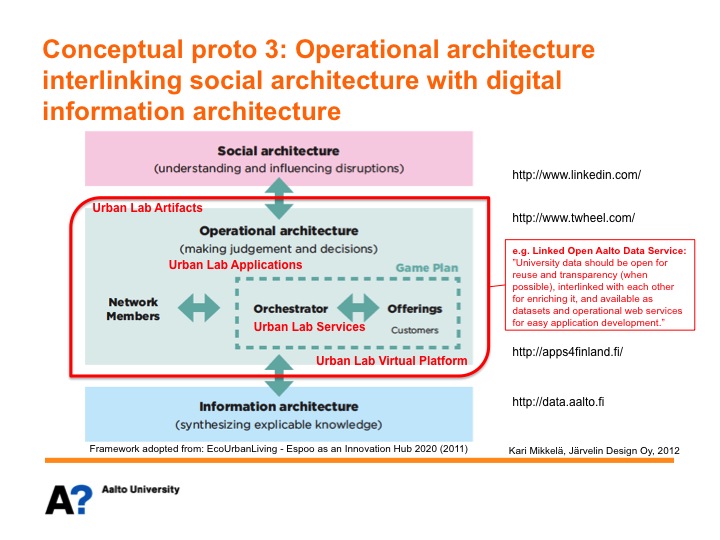
In this Prezy Tomi Kauppinen from Aalto University Department of Media Technology presents via examples what Linked Open Aalto is about. He also contextualized the Aalto case to his work about Linked Science and a previous project in Germany.

Linked Open Aalto by Tomi Kauppinen

Urban Mill builds bridges between social, physical and digital spaces. During the 2014 we prototype and demo how Urban Mill resources, activities and outcomes can be spatially re-presented and re-used on different digital layers in the Otaniemi context.  Linked Open Aalto initiatives efforts support that work greatly.

Urban Mill Digital Space

Aallon uudelle Oppimiskeskukselle palvelukonsepti käyttäjälähtöisesti!

Aalto-yliopiston kirjaston, tulevan Oppimiskeskuksen, palvelumuotoiluhankkeen tulokset ovat valmistuneet. Hanke synnytti Oppimiskeskukselle kunnianhimoisen palvelulupauksen ”Yhdessä oppiminen tekee meistä maailman parhaita” ja uudenlaisen palvelukonseptin, jossa nykyisten palvelujen lisäksi on mukana asiakkaiden tarpeista nousseita uusia palveluja.

Uusi palvelukonsepti tukee kirjaston muodonmuutosta monikanavaiseksi, eläväksi oppimiskeskukseksi – osaksi oppimisympäristöä. Tulevaisuudessa oppimiskeskus on vetovoimainen kohtauspaikka ja koko yliopiston toiminnan näyteikkuna, joka tukee sekä yksin että yhdessä oppimista.

Otaniemen kampuskirjasto muuttaa remontin alta väistötiloihin Otakaari 1:een vuoden 2014 lopussa. Tavoitteena on testata uusia palveluja jo ennen kuin peruskorjattuihin tiloihin muutetaan takaisin vuonna 2016.

Tutustu loppuraporttiin: http://web.lib.aalto.fi/learningcenter/wp-content/uploads/2014/02/Oppimiskeskus_loppuraportti_300114_JULKINEN.pdf

Tutustu Oppimiskeskussuunnittelun: http://web.lib.aalto.fi/learningcenter/fihome/

User centered service concept for the new Learning Center

The results of the service design project for Aalto University Library’s forthcoming Learning Center are now finalised.  The project generated an ambitious service promise for the Learning Center “Learning together makes us best in the world”, and a novel service concept including new services arising from customer needs in addition to existing services.

The new service concept will support the transformation of the library into a lively multi-channel Learning Center – a component of the learning environment. In the future the Learning Center will be a magnetic meeting point that will showcase the university’s activities and support learning alone and together.

Otaniemi Campus Library will move to a swing space in Otakaari 1 at the end of 2014. The aim is to test the new services before returning to the modernised premises in 2016.

Situation awareness in urban planning. Case: mobility planning decision-making in Otaniemi campus and T3 area

Susa Eräranta from the EUE community has published an interesting thesis (eräranta_susa_thesis_2013) Abstract of this work:

”The process of developing urban areas is divided into a number of separate,
fragmented and overlapping strategy, planning and implementation projects
from a number of actors. Simultaneously, decision-makers face an overflow of
information coming from various actors, various themes, and in various formats.
Unless a decision-maker is conscious of the prevailing situation and the societal
complexity, also benign planning decisions may have undesired and surprising
outcomes.

The point of departure was to analyze how urban planning decision-makers
perceive various projects’ position in the overall urban planning and development
process of an area (situation awareness), the connections between various
projects influencing each other (systemic understanding), and the information
used in generating situation awareness (information use). The situation awareness
of a decision-maker will affect the quality of a decision, and through that the
planning, sustainability, livability, functionality and accessibility of an area. Lue loppuun

Monitilatoimistot yleistyvät – Urban Mill kokoaa toimijoita

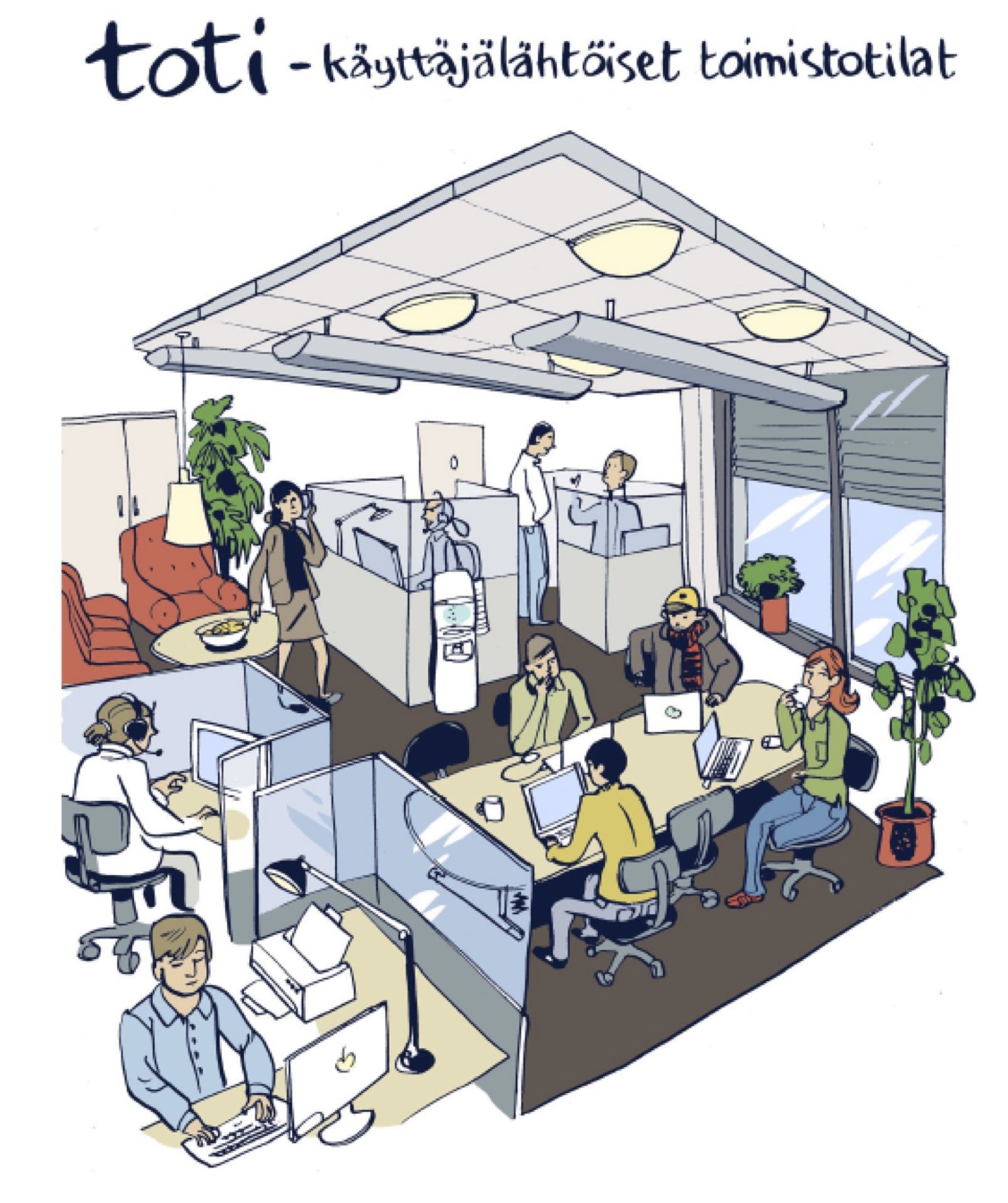
MONITILATOIMISTO – ohjeita käyttöön ja suunnitteluun
Suvi Nenonen, Ursula Hyrkkänen, Heidi Rasila, Valtteri Hongisto, Jukka Keränen, Hannu Koskela, Esa Sandberg

TOTI - käyttäjälähtöiset toimistotilat

Raportti on vapaasti ladattavana sivulla www.ttl.fi/toti. Dokumenttiin ei liity tekijänoikeudellisia rajoituksia hanketta toteuttaneiden tutkimuslaitosten tai
rahoittajien puolesta.

”Monitilatoimisto on tietotyön murroksen synnyttämä uusi, joustava ja muunneltava
tilakonsepti. Se tarjoaa toiminta-alustan lisääntyvälle ja monimuotoistuvalle yhteistyölle sekä niille työrupeamille, jolloin yksin tehtävä työ ja keskittyminen ovat tärkeitä.
Monitilatoimiston tulisi mahdollistaa sopivan työtilan valinnan kulloiseenkin työtehtävään: rauhallisia työtiloja keskittymistä vaativille töille sekä ryhmätyötiloja ja kohtaamispaikkoja erikokoisille ja erityyppisille neuvotteluille ja yhteistyötilanteille.

Lue loppuun

Kaupunkitieto- skenaariotyöpaja 21.11.2013 Aallon Media Factoryssä

Tervetuloa mukaan Tekes-rahoitteisen KaToHan-tutkimusprojektin (Kaupunkitieto ja toiminnan hallinta) skenaariotyöpajaan.

Kaupunkitieto-skenaariotyöpaja

Thursday, November 21, 2013 from 1:00 PM to 4:00 PM (PST)

Helsinki, Finland

Työpajassa on tarkoitus edistää energian käyttöön, joukkoliikenteeseen ja ilmanlaatuun liittyvän kaupunkitiedon hyödyntämistä kaupungin suunnittelussa ja arjen kaupunkilaisuudessa. Pohdimme lisäksi tietoaineistoihin ja -palveluihin liittyviä mahdollisuuksia ja haasteita.


Toivomme mukaan kaupunkiaktiiveja, sovelluskehittäjiä, avoin data -aktiiveja ja Helsingin kaupungin edustajia.
Mukana työpajoissa ovat lisäksi KaToHan-projektin osapuolet: Aalto-yliopisto, Helsingin Energia, HSL, HSY, Siemens ja Santa Margarita.

Skenaariotyöpajojen tavoitteena on löytää ratkaisuja tai ehdotuksia tulevaisuuden toimille kaupunkitietoon ja sen hyödyntämiseen liittyen, mutta samalla myös saada aikaan kaikkia osapuolia hyödyttävää vuorovaikutusta tahojen välillä.

Työskentely tapahtuu sekaryhmissä, ja sen tarkoituksena on pyrkiä luomaan skenaarioita jotka liittyvät kaupunkitiedon käyttöön erilaisissa tilanteissa. Ryhmätyöskentelyn tueksi ja avuksi ryhmät saavat käyttöönsä setin työkaluja, jotka on luotu kaupunkitiedon käsittelyä varten ja kaupunkilaisten jokapäiväiseen elämään pohjautuen.

Työpajan lopputuloksena laajenee käsitys siitä, mitä kaupunkitieto on ja miten sitä voidaan hyödyntää uudenlaisissa hallintamalleissa, ja mitä kaupunkitieto tarkoittaa kaupunkilaisten jokapäiväisen elämän näkökulmasta. Tavoitteena on myös saada konkreettisia ideoita tulevaisuuden kaupunkitiedon tarpeille ja käytölle.

Lue loppuun

Myllystä maailmalle: Consair Oy

Alku

Olipa kerran, tarkemmin 2011, ikinuori opiskelijapoika Pekka, joka toisen vuoden kemianopintojensa ohella palasi kesätöihin rakennustyömaille. Kokemusta raksan haalarihommista oli karttunut jo useita vuosia ennen opintojen aloitusta, sillä YO-lakkia oli vaikea saada osaamatta sanaakaan ruotsia.

Pekka valoi pilareita ja kantoi lankkuja kuukauden ajan. Sitten hän näki työkaverinsa rälläköimässä Leca-harkkoseinää ilman minkäänlaisia hengityssuojaimia. Siis näki niinkuin nyt pölypilvessä ylipäätään voi nähdä. Kaivettuaan pölymuhjun pois nenästään hän hoksasi, että kenties opinnot ja tuon niin tutun ja ikävän ongelman voisi yhdistää jollakin keinoin. Työmaamestarin tavattuaan hän kysäisi kiinnostaisiko pääurakoitsijaa, Skanskaa, tietää millaista ilmaa työmaalla hengitetään? Mestari innostui välittömästi ja kutsui pääkonttorilta paikalle työturvallisuusjohtajan. Lyhyiden neuvottelujen jälkeen Pekka ryhtyi kantamaan työmaalle Ilmatieteen laitoksen mittareita.

Kahden kuukauden kuluttua Pekka esitteli tulokset Skanskan johdolle, joka päätti jo esittelyn aikana sijoittaa rahaa pahimman ongelmakohdan eli rakennustyömaiden laastityön hoitoon. Pekka poistui paikalta idea mukanaan; entä jos rakennamme laitteen jolla laastityön kohdepoisto hoidetaan fiksusti?

Tuumasta toimeen

Talvella 2011 idea alkoi jalostua yhdessä Jarnon ja Juhan kanssa ensimmäiseksi prototyypiksi. Kaikki olivat työskennelleet rakennuksilla ja tiesivät, miltä betonimuhju nenässä tuntuu. Ensimmäisen laastisäkin kaataminen huuva v.1.0 edessä oli loistava hetki; tämähän toimii! Ensimmäinen räpellys oli nipinnapin pystyssä pysyvä peltilevykokoelma joka olisi karkoittanut variksetkin pellolta. Se kuitenkin kertoi, ettei ideaa kannattanut vielä haudata.

Lue loppuun

CSE Digital Service Design Course at Urban Mill

  • CSE-E6250 Digital Service Design, Course with Varying Content (3 ECTS)
  • October 14 – 18 at Startup Sauna and Urban Mill, both at Betonimiehenkuja 3
  • Max number of participants: 10

”Intensive course on theatrical methods in user centric service design”

Byron Stewart, Co-Founder and Artistic Director at Dramatic Diversity (Chicago, USA) will be visiting Finland in October and will be hosting a course on emphatic service design using theatrical methods.

The course will be arranged in co-operation with the Urban Mill in Otaniemi. In the course students will learn how to various methods to strengthen their empathy for the users of the service they create and in this way design better services.

The course is open for students of service design at all Aalto Schools. You should be familiar with service design concepts and methods and hence the course mainly targets 2nd year Master’s level students.

In the course the students will we working on new and innovative concepts for having lunch on the Aalto campus.

Course program:

Lue loppuun

Regional Innovation Ecosystems workshop started at Urban Mill

`Regional Innovation Ecosystems` workshop, CS 0010, 3 ECTS
30.9-11.10, Design Factory, Urban Mill, Start-Up Sauna, Otaniemi Campus

Download Regional Ecosystems poster and PRELIMINARY programme Regional Innovation Ecosystems workshop CS 0010_LM

The workshop is the Kick-Off and the pilot workshop on integrating Creative Sustainability studies in the development process of the T3 area (Otaniemi-Tapiola- Keilaniemi) in the global context (collaboration with Espoo and Shanghai cities).

The workshop is organized with local stakeholders and partners from Tongji University/Shanghai.

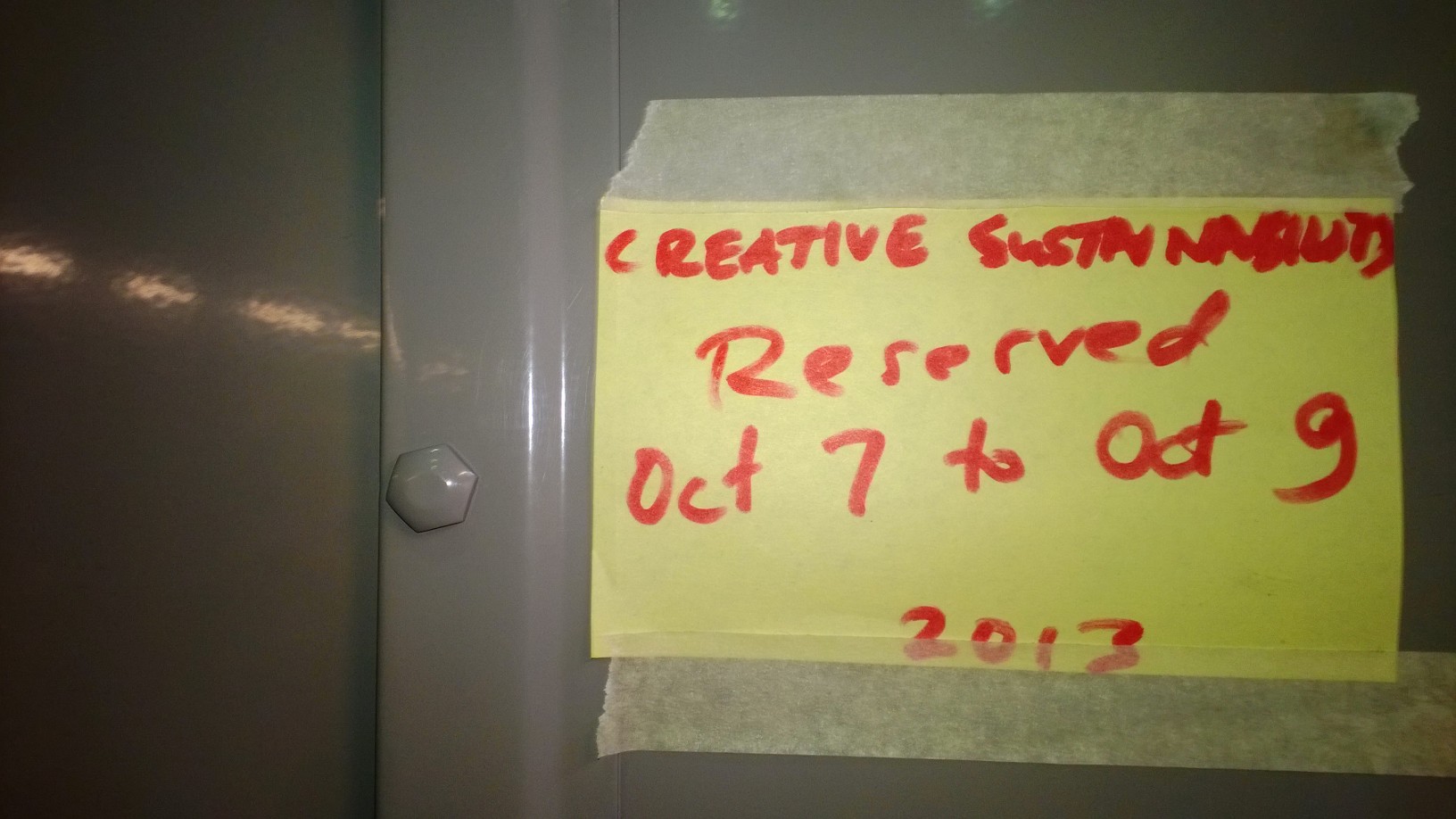
CASE: The main task of this workshop is to plan and design a desirable courtyard for Aalto University Design Factory, Urban Mill and Start-Up Sauna that will inspire the development of the creative community on Otaniemi Campus. The outdoor space should have following features: sustainability, creative, accessibility, reasonable function, interaction with the above mentioned buildings, surroundings (T3 area, Otaniemi, Keilaniemi, Tapiola) and stakeholders, user friendly and inclusive consideration, etc.

CS Cavessa

Course keeps its home base  in the Urban Cave.

The course is a team-based workshop that will start with context study, lectures and brainstorming, will be followed by a working studio, to develop several scenarios of how the space can be used by the people of Aalto University and its collaborators. The students will finally finish the project with a power point presentation and a poster (and a physical model). Lecturing, brain storming, group share, critique and desk review will be the main teaching tools.

Teachers in Charge:

Aalto University/CS, Programme Director Tiina Laurila, gsm:+358 50 4433977
Tongji University/College of Design and Innovation; Dean, Prof. LOU Yongqi

Workshop teachers: urban planning&design; Jarmo Suominen, architecture&building engineering; Markku Lappalainen, business&innovation; Antti Ainamo and design&art; Laura Isoniemi, Ari Laitala; land use management & real estate business, Visiting lecturers

Lue loppuun

Väre wins Aalto Campus 2015 architectural design competition

From: http://campus2015.aalto.fi/en/

Campus 2015– open international architectural design competition for Otaniemicentral campus of Aalto University

Väre by verstas Architects. The winner of the Campus 2015 competition.

A winner has been declared for the open international architectural design competition Campus 2015, arranged by Aalto University Properties Ltd. The competition jury selected the entry Väre, designed by the Finnish firm Verstas Architects and its team of architects, Väinö Nikkilä, Jussi Palva, Riina Palva and Ilkka Salminen, as the first prize winner. According to the jury, this scheme most successfully solved the challenges and conflicting demands of the competition.

Verstas_arkkitehdit.jpeg

Second prize to Finland, third prize to Spain

Second prize was awarded to the entry 492700 Leap, designed by Esa Ruskeepää Architects Ltd from Finland. The entry had a number of very strong and laudable qualities and it was in close competition with the winner all the way until the end. Third prize was awarded to the entry stay strong sweetie by Luis Martínez Santa-María from Spain.

In addition, the jury decided to purchase three entries and grant six honourable mentions.

Väre is a strong and convincing entry

Väre by Verstas Architects. The winner of the Campus 2015 competition.

The aim of the Campus 2015 competition was to design a new core campus for Aalto University in Otaniemi and the competition process was arranged in two phases. The 1st phase attracted 189 entries. Six of these entries were chosen for the second phase, the goal of which was to create a unique solution and a usable learning environment for the new building and its immediate surroundings. The quality of the architecture as well as cost efficiency and ecological sustainability were among the assessment criteria.

The jury describes the winner, Väre, as a strong and convincing entry, which has been developed positively and has managed to answer most of the queries posed by the jury after the results from the first phase of the competition. The layout offers its own structural DNA matrix as the organising principle for the new buildings; it forms this pattern based on two of the principal coordinates taken from the nearby old main building of the former Helsinki University of Technology and the main library, which were designed by Alvar Aalto.

Lue loppuun